Egon Eiermann
Egon Eiermann (1904–1970) was one of the leading figures of postwar German architecture and design. Trained at the Technische Hochschule in Berlin under Hans Poelzig, he developed a rigorous visual language defined by structural clarity, precision of detail, and restrained elegance.
A major architect of West Germany’s reconstruction, he was responsible for several landmark projects, including the Kaiser Wilhelm Memorial Church in Berlin, the West German Pavilion at the 1958 Brussels World’s Fair, designed with Sep Ruf, and IBM Germany’s headquarters in Stuttgart. His work reflects a deeply modernist approach in which function, constructive logic, and formal sobriety play a central role.
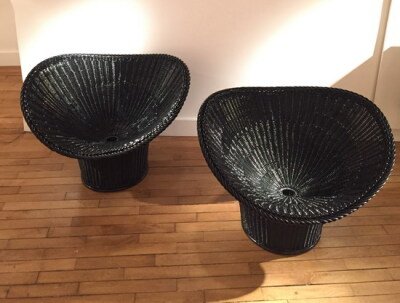
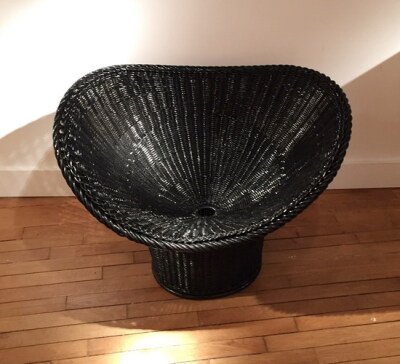
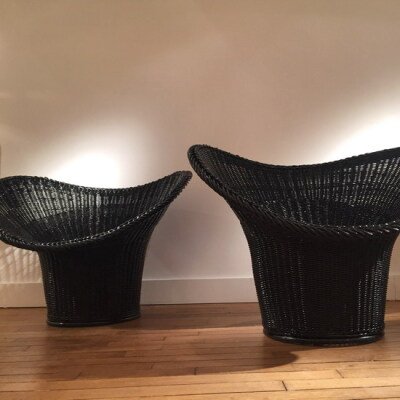
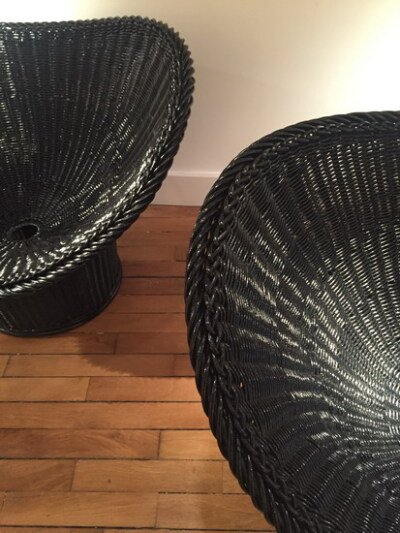
Alongside his architectural practice, Eiermann also left a lasting mark on furniture design through creations that have become iconic, especially his chairs and tables, conceived with the same principles of rationality, visual lightness, and precision.