Luigi Colani
Born Lutz Colani in Berlin in 1928, Luigi Colani was one of the most radical and visionary designers of the 20th century. Trained in sculpture and later in aerodynamics in Paris, he developed an approach to design rooted in the laws of nature, consistently rejecting the right angle in favor of organic, fluid, and biomorphic forms.
From the 1950s onward, Colani pursued an experimental practice that spanned automotive and aeronautical design, furniture, consumer electronics, and tableware. He collaborated with major international companies including BMW, Fiat, Canon, Sony, and Rosenthal, while maintaining an independent and often provocative stance, operating at the margins of conventional industrial design.
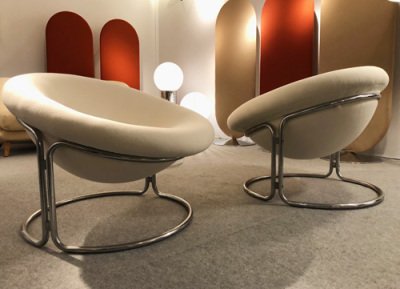
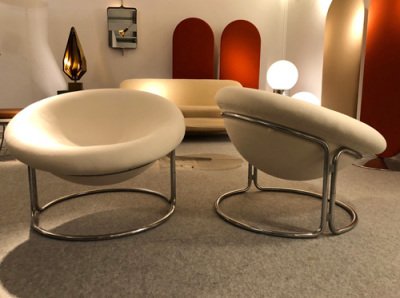
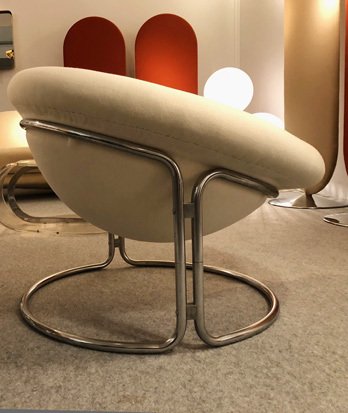
Central to Colani’s philosophy was the belief that “nature is the ultimate designer.” Drawing on extensive aerodynamic research, he created objects optimized for performance yet deeply sculptural in character. His molded fiberglass seating, futuristic interiors, and utopian prototypes blurred the boundaries between design, sculpture, and speculative architecture.
From the 1970s onward, Luigi Colani became a media icon, particularly in Germany and Japan, where his influence was profound. Both celebrated and controversial, he envisioned future cities, ultra-efficient vehicles, and immersive interiors shaped like organic landscapes.