Georges Pelletier
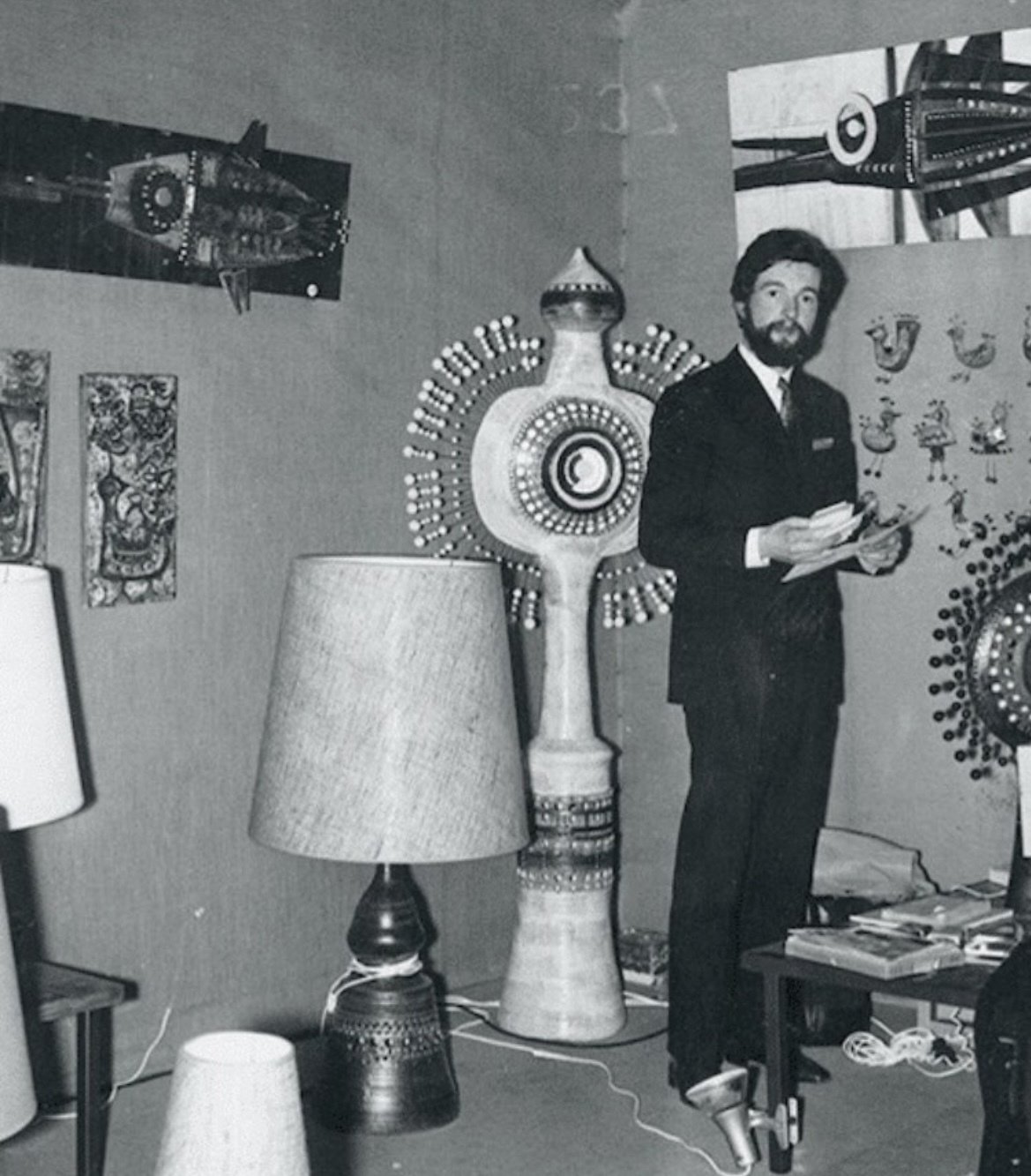
Born in 1938 in Schaerbeek, Belgium, Georges Pelletier was a major figure of postwar French ceramics, whose work bridged sculpture, light, and functional design. He began his artistic training at an early age at the École du Pioulier in Vence, founded by Célestin Freinet, before continuing his studies in Paris at the Académie Charpentier and the École des Métiers d’Art. He also worked in the studio of Claude Pantzer and gained early experience at the Poteries d’Accolay.
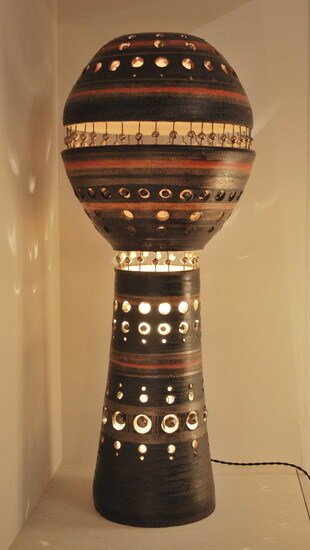
In 1961, Pelletier opened his first studio in Paris, producing unique ceramic objects, sculptures, and lamps. That same year, his work attracted the attention of Roche Bobois, with whom he collaborated until the early 1970s, notably designing sculptural ceramic lighting pieces that have since become emblematic of the period.
In 1973, he moved to Cannes, where he established a new studio and later worked alongside his son, Benjamin Pelletier. Throughout his career, Georges Pelletier developed a highly recognizable vocabulary of organic forms, perforated surfaces, and luminous volumes, exploring the expressive potential of ceramics at the crossroads of art and design.
His work has been exhibited internationally and is today sought after by collectors for its sculptural presence, technical mastery, and poetic relationship to light. Georges Pelletier passed away in 2024, leaving behind a body of work that remains a key reference in the history of 20th-century ceramic design.